
Alberta Workplace OH&S First Aid Standards
What First Aid Training Do Companies in Alberta Actually Need?
Understanding first aid requirements in Alberta isn’t optional—it’s a legal obligation under the Alberta Occupational Health and Safety Code. Whether you operate an office, construction site, or remote work environment, your training, staffing, and equipment must align with legislated standards.
This article breaks down what your company needs to stay compliant—and more importantly, prepared.
Workplace First Aid in Alberta: What the Law Says
Under Part 11 of the OHS Code, employers (or prime contractors) are responsible for:
Providing trained first aiders on every shift
Supplying appropriate first aid kits and equipment
Ensuring access to emergency transportation
Maintaining proper documentation and reporting
Training must be delivered by an approved agency and meet CSA Standard Z1210-17. (Alberta.ca)
The exact requirements depend on three variables:
Hazard level (low, medium, high)
Number of workers on shift
Distance to medical care
These factors determine whether your site requires a Basic First Aider, Intermediate First Aider, or higher-level provider. (search-ohs-laws.alberta.ca)
Basic vs Intermediate First Aid: What’s the Difference?
Basic First Aid (Formerly Emergency First Aid)
Best suited for:
Offices and administrative workplaces
Retail environments
Low-risk job sites
Covers:
CPR and AED use
Choking emergencies
Basic wound care and bleeding control
Minor injuries
Under OHS, many low-hazard workplaces with small teams (2–49 workers) can meet compliance with at least one Basic First Aider per shift. (search-ohs-laws.alberta.ca)
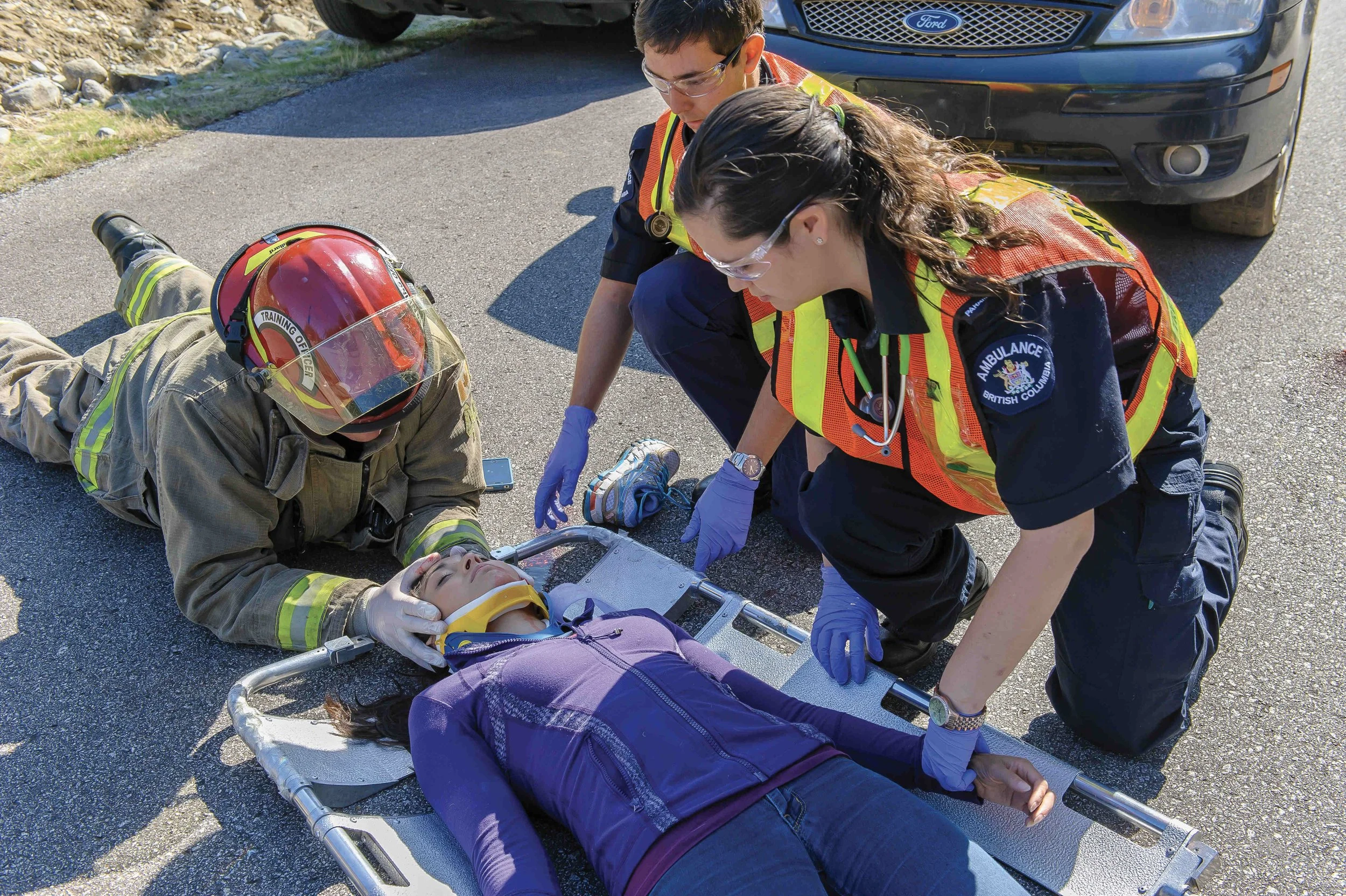
Intermediate (Standard) First Aid
Intermediate First Aid (Formerly Standard First Aid)
Best suited for:
Construction and trades
Industrial workplaces
Tourism and outdoor operations
Remote or high-risk environments
Expanded skills include:
Patient assessment and ongoing care
Oxygen therapy
Spinal motion restriction
Management of serious trauma and medical emergencies
OHS requirements frequently mandate Intermediate First Aiders when:
Work sites are remote or isolated
Hazard levels increase
Workforce size exceeds certain thresholds
In many scenarios, relying only on Basic First Aid will leave your site non-compliant. (search-ohs-laws.alberta.ca)

INfant CPR
CPR Levels Explained (A, B and C)
Most workplace training includes CPR—but the level matters:
CPR A: Adult-only resuscitation
CPR B: Children and Infants
CPR C: Adult, child, and infant resuscitation (industry standard)
For the majority of Alberta workplaces, CPR C is the expected baseline, especially when paired with Intermediate First Aid.
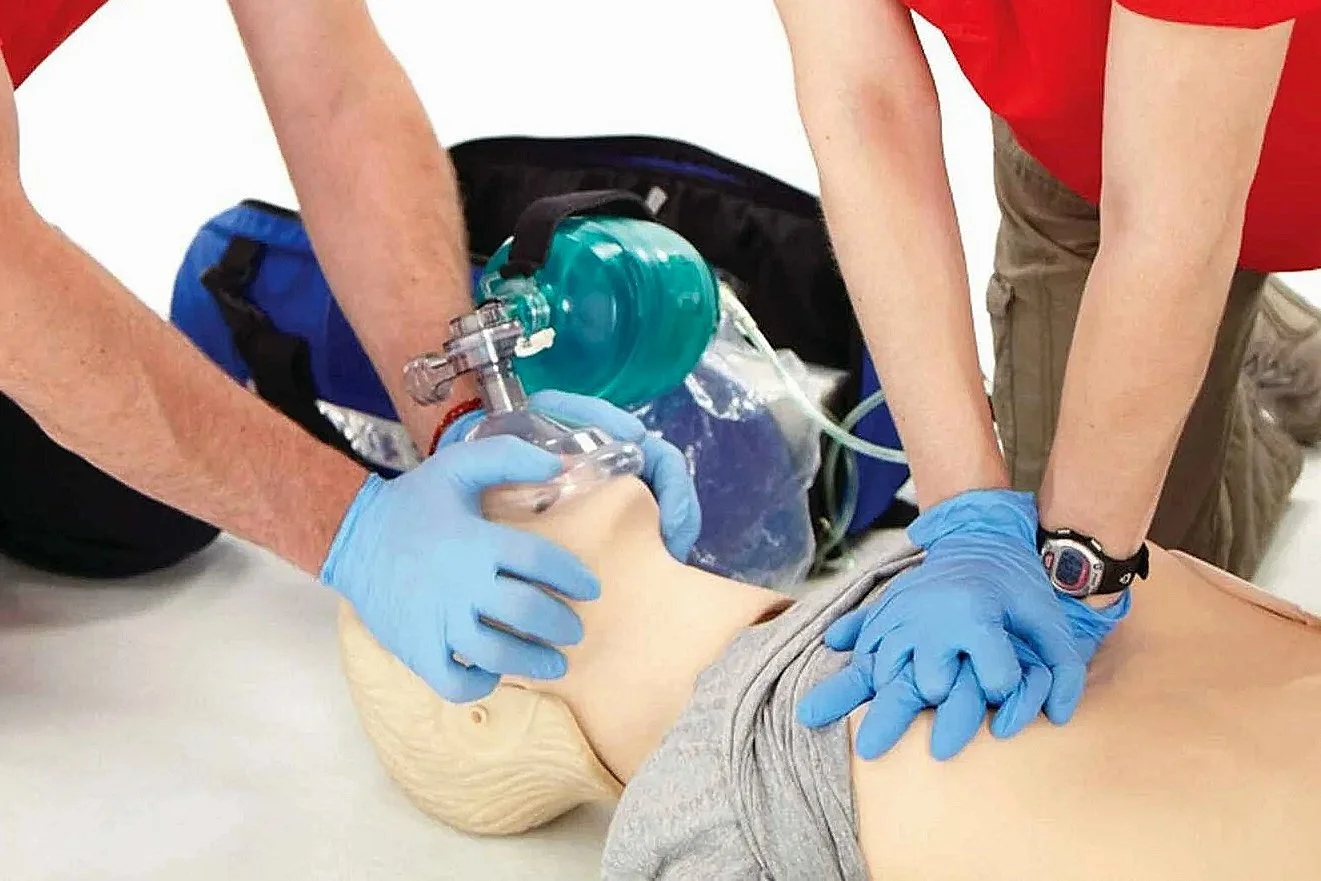
Basic Life Support (BLS) Training
Who Needs Basic Life Support (BLS)?
Basic Life Support (BLS) is a higher clinical standard of CPR and is typically required for:
Healthcare providers (nurses, physicians)
EMS and fire services
Lifeguards and clinical staff
Some high-performance safety teams
Dentistry Offices
BLS includes:
High-performance CPR (team-based resuscitation)
Bag-valve-mask ventilation
Advanced airway considerations
While BLS is not typically required under OHS for standard workplaces, it is essential in clinical or emergency response roles.
Matching Training to Your Worksite
The biggest compliance mistake companies make is assuming one level fits all.
In reality:
A small office may only require Basic First Aid
A construction site often requires Intermediate First Aid
A remote lodge or industrial site may require multiple Intermediate providers—or even Advanced care
The OHS Schedule 2 tables clearly scale requirements based on workforce size and proximity to care. (search-ohs-laws.alberta.ca)
Why This Matters
Non-compliance with Alberta OHS standards can lead to:
Fines and stop-work orders
Increased liability
Delayed emergency response
Worse outcomes for injured workers
More importantly, the right training ensures your team can respond effectively when it matters most.
Train Your Team with Confidence
At Peak 2 Peak Safety, we specialize in delivering Alberta OHS-compliant first aid training tailored to your specific workplace.
We offer:
Flexible scheduling for your team
Industry-specific training
👉 Book a private group training today and ensure your workplace is compliant, confident, and prepared.
We can come directly to you—onsite training is available at your local business, making it easy to train your entire team with minimal disruption.
Reach out to us to get started.